ByJohn A
What Is Market Sentiment in Cryptocurrency?
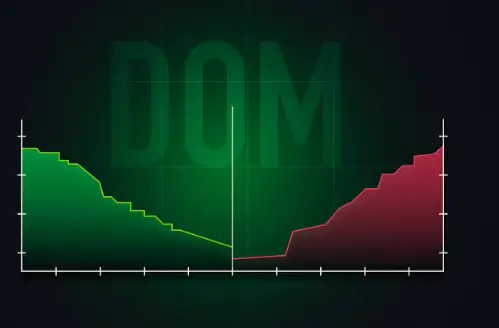
Market sentiment in cryptocurrency reflects the collective mood and expectations of traders, shaping price moves beyond fundamentals. It blends quantitative signals from order books, volatility, and liquidity with qualitative cues from social data and news. Sentiment helps explain momentum shifts, risk appetite, and potential reversals, yet it can be unstable and crowd-driven. For traders, recognizing these signals offers risk management clues, but must be balanced with objective analysis as conditions evolve.
What Market Sentiment Reveals About Crypto Moves
Market sentiment tracks how traders and investors collectively perceive the crypto market, influencing price movements beyond fundamental value.
What sentiment signals shifts in momentum, risk appetite, and expected returns, guiding short- and medium-term decisions.
Behavioral biases color interpretations of data, creating skewed reactions to news and charts.
Awareness of these biases aids disciplined, cautious assessment of crypto moves.
How Crypto Sentiment Is Measured Today
Crypto sentiment today is measured through a combination of quantitative indicators and qualitative signals that capture trader mood, risk tolerance, and expected volatility. Analysts emphasize standardized metrics from order books, sentiment surveys, and volatility indices while corroborating with social data.
Briefing biases persist, data limitations constrain cross-exchange comparisons, and methodological transparency remains essential for credible interpretation of market mood.
See also: What Is Market Depth in Crypto?
Why Market Sentiment Matters for Traders
Investor decisions hinge on sentiment because mood shifts can precede price moves and volatility changes. Market sentiment informs risk management by highlighting potential crowd-driven reversals and overextensions, enabling prudent position sizing and stop placement.
For traders, awareness of trade psychology reduces reflexive errors, fosters disciplined entry and exit criteria, and supports objective analysis amid uncertainty rather than chasing narrative momentum.
Gauge Market Sentiment Without FOMO: Practical Tips
A practical approach to gauge sentiment without succumbing to FOMO emphasizes disciplined data use, triangulating signals from multiple sources rather than following a single narrative. The method evaluates sentiment indicators and investor psychology while recognizing biases.
Readers compare data sources and sentiment signals, validating ideas with objective metrics, reducing noise, and preserving freedom to act on reasoned conclusions rather than hype.
Conclusion
Market sentiment in crypto captures the crowd’s mood, often foreshadowing moves beyond fundamental value. It’s measured via order-book signals, volatility, and social data, complemented by surveys and qualitative cues. For traders, sentiment signals potential reversals and risk appetite shifts, but they can mislead when crowd psychology runs hot or fearfully conservative. In practice, analysts blend metrics, avoid overreliance, and trade with disciplined risk controls, recognizing that hype and doubt can distort even robust data. Irony: consensus often predicts the unpredictable.